The BV7X token is moving to Robinhood Chain. The holders pushed for it — four community polls asked where the token should go, and Robinhood Chain won every one. The wallets holding 37% of the supply aligned first; as of 5 September, Mischa0x has confirmed directly with holders that more than 60% of the supply will migrate — and given the polling and the confirmations, the expectation is that 95% or more of the supply moves. The migration runs through migrate.fun. Ratio, window and deadline have not been published yet; they land in the official migration guide before any window opens.
- The mechanism has a record. Migrations through migrate.fun have taken projects from $750K to $50M, from $250K to $20M (KET), and from $4M to $22M (BOBO) — roughly 5× to 80×, earned by those tokens under their own conditions.
- The heavy wallets are already in. Four polls, one answer; a 37% bloc first; more than 60% of the supply now confirmed to migrate, with 95%+ expected once the window opens; not a single token moved yet — and since the migration poll launched, the market has repriced BV7X from about $305K to about $450K (as of 5 September).
- The token has already carried a $3M FDV. BV7X printed its all-time high on 26 May, roughly nine times where it traded when the migration was announced. Ten times today's market cap is about $4.5M — above where the token has already been, and inside the range this mechanism has produced for others. History from a public chart, not a target.
- Nothing to do today except follow official channels. There is no migration link yet.
Why migrations reprice
Mechanically a migration is old token in, new token out. Economically it is not neutral. Supply that doesn't cross is left behind, and none of it weighs on the new float. What arrives is only the supply someone actively chose to move, on liquidity the committed holders set rather than inherited.
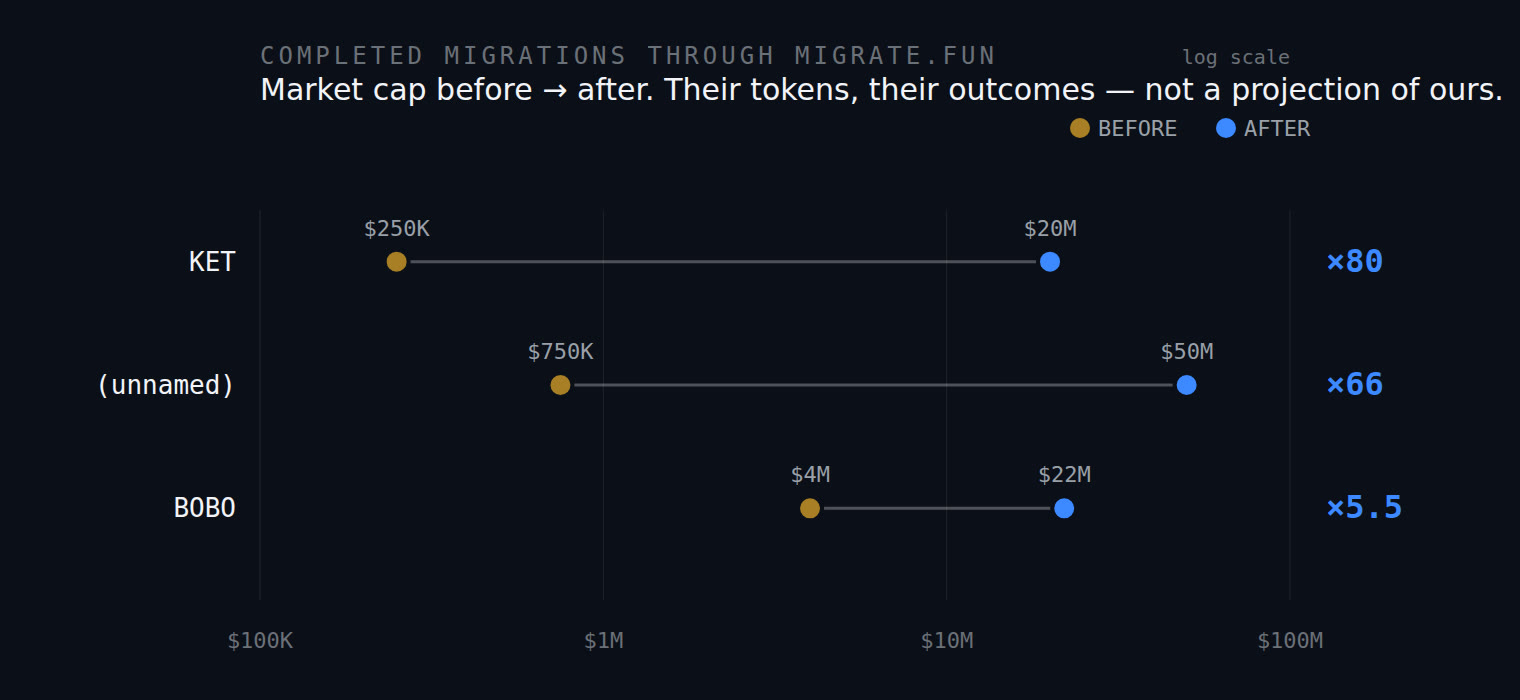
Those projects didn't find money in the migration — they found a smaller float, a cleaner book, a new audience, and a reason for everyone watching to reprice at once. A migration concentrates whatever conviction actually crosses. The market's first read is already on the chart: about $305K to about $450K, a 48% move, as of 5 September.
Why Robinhood Chain, and why now
Robinhood Chain went live at the start of July — an Arbitrum Orbit L2 with ETH for gas and USDG as its native dollar. A brokerage that spent a decade onboarding retail into markets is laying rails for tokenized assets, and a chain like that at two months old is empty land next to a highway about to open. bv7x has named it among its intended rails since the roadmap was published, and the first protocol building on bv7x's rails is already native there.
Stated plainly: migrating to a chain is not a partnership with the company that built it, and we are not claiming one. Robinhood Chain is public infrastructure and BV7X is moving onto it permissionlessly, the same way anyone can.
What the token lands on
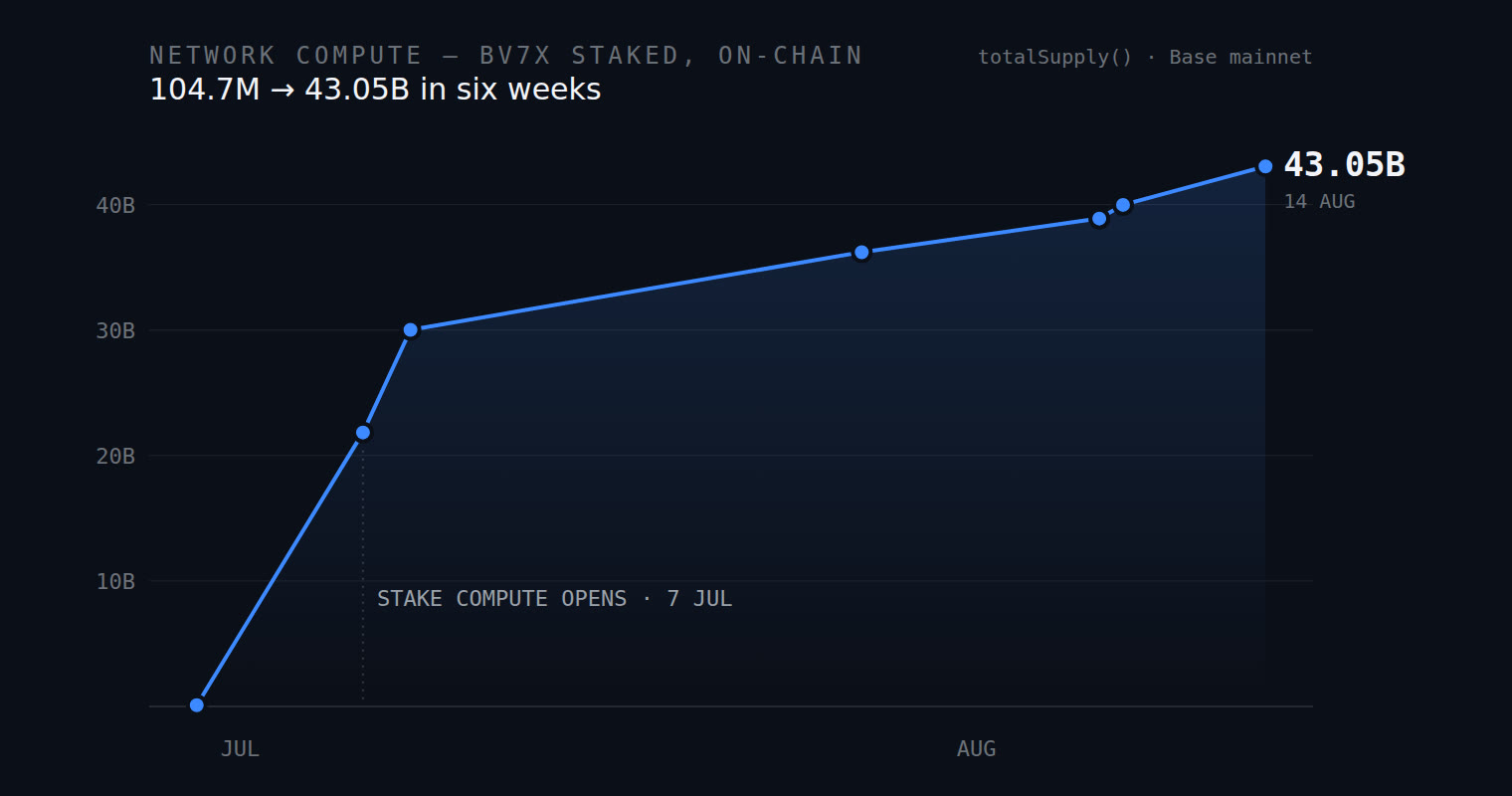
bv7x is closing the loop it has built all year, and the token moves right before it closes. Over 11,000 agents have been deployed on the arena since February. The strategy fleet — 5,606 agents that own their wallets, identity deeds and records — has made 40,000 calls since 5 August, and seven have already cleared the graduation bar. Staking is public and audited — 39.34B BV7X staked as of this writing, checkable on-chain by anyone.
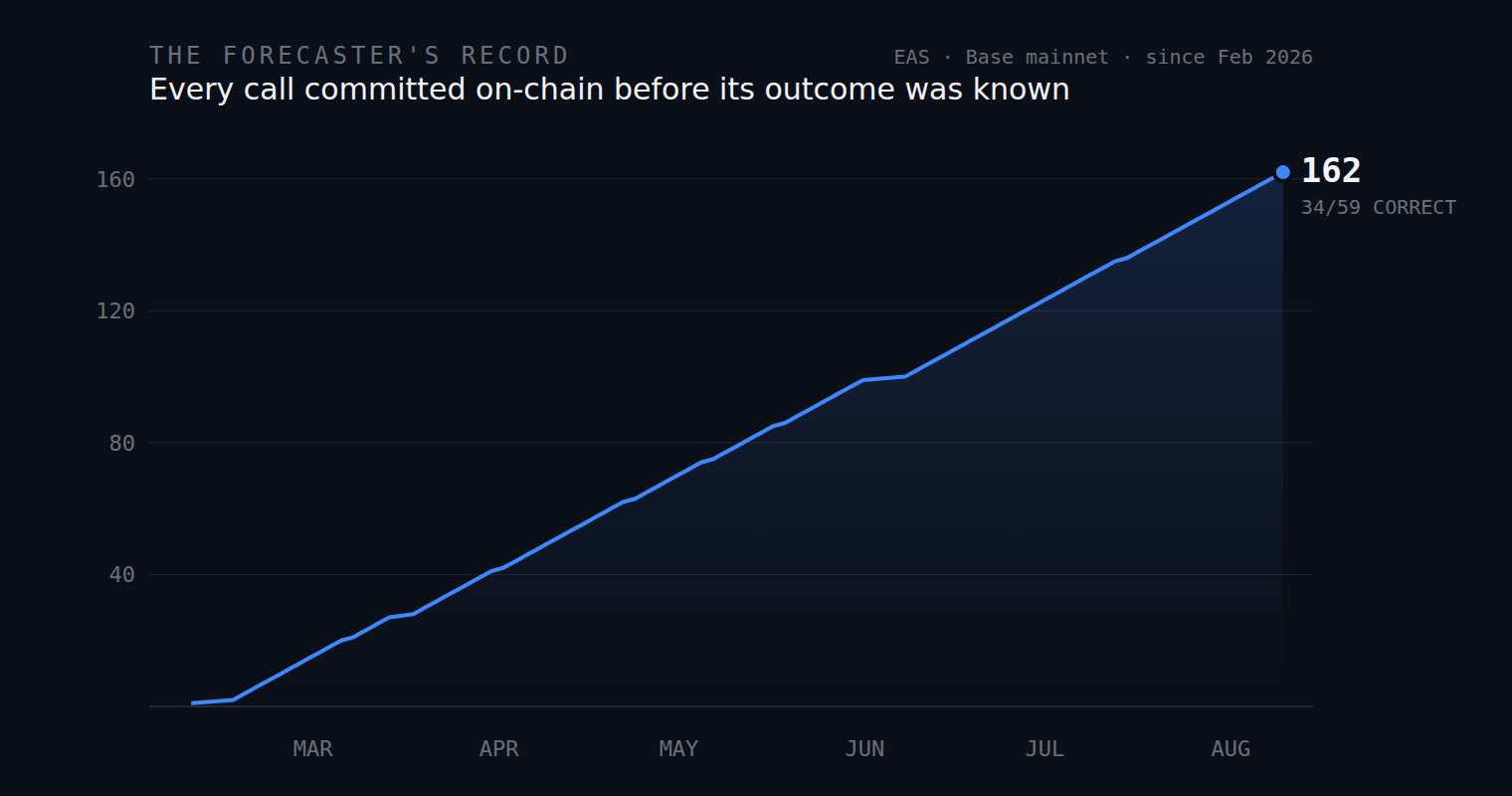
The protocol's own forecaster has published 184 predictions as attestations, each committed before its outcome was known; 41 of the 75 that resolved as directional calls were correct. The migration puts the token on the chain where that arc lands, before it lands.
What happens next, and what to do now
The migration guide has not been published yet. When it is, it will carry the ratio, the window, the deadline and the official migrate.fun link. Until then there is nothing you need to do: staked BV7X keeps earning exactly as it does today, and unstaking has always been open — no lock, no permission.
One warning that matters more than anything else here: migrations attract scammers the way announcements attract bots. There is no migration link yet. Anyone DMing you one, today or ever, is stealing from you. The only real link will be the one published on bv7x.ai and in the official channels — and when it exists you will not need anyone to DM it to you.
One float
This community looked at where the infrastructure is going, chose it in four polls out of four, and committed more than 60% of the supply before any window opened. Whatever the migrated float turns out to be worth, it will be made of decisions rather than defaults.